South Asia Desk | Regional Economy | January 2026
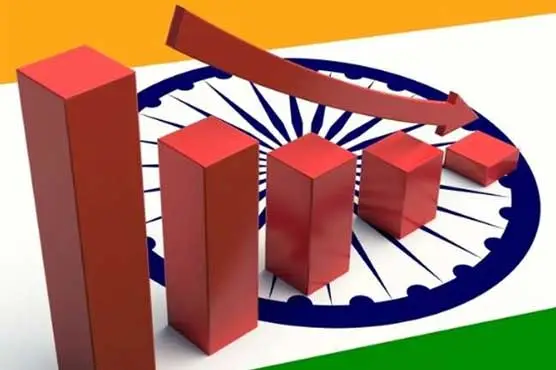
South Asia’s economic integration has accelerated over the past decade, with cross-border trade, digital services, logistics, and capital flows increasingly shaping regional growth. India, as the region’s largest economy, plays a central role in this ecosystem. However, economists, policymakers, and SME leaders across neighboring countries are raising concerns that some Indian business practices and policy-driven market behaviors are generating negative spillover effects for smaller South Asian economies.
While India’s growth has created opportunities, critics argue that imbalanced market power, policy asymmetries, and aggressive corporate expansion are undermining fair competition, local entrepreneurship, and regional economic resilience.
Market Dominance and Asymmetric Competition
One of the most cited concerns is market dominance by large Indian conglomerates and tech platforms in neighboring countries such as Bangladesh, Nepal, Sri Lanka, and Bhutan. Backed by scale advantages, access to capital, and strong domestic policy support, these firms often enter smaller markets with pricing and distribution capacities local businesses struggle to match.
SME associations in South Asia note that:
- Local firms face price undercutting that is unsustainable in the long term.
- Profits are frequently repatriated, limiting reinvestment in host economies.
- Domestic startups are crowded out before reaching scale.
This has raised fears of economic dependency, where local markets become consumption zones rather than innovation hubs.
Trade Barriers and Non-Tariff Constraints
Despite regional trade agreements, exporters from neighboring South Asian countries continue to report non-tariff barriers when accessing the Indian market. These include complex certification requirements, port delays, sudden policy shifts, and informal compliance hurdles.
At the same time, Indian exporters often enjoy smoother access into smaller South Asian economies, creating what trade analysts describe as a structural imbalance in regional trade flows.
As a result:
- Trade deficits widen for smaller economies.
- Export-led SME growth is constrained.
- Regional value chains remain India-centric rather than regionally diversified.
Digital and Fintech Expansion Pressures
India’s rapidly expanding digital economy—particularly in fintech, e-commerce, and SaaS—has crossed borders at unprecedented speed. While this has improved access to services, it has also raised regulatory and data sovereignty concerns.
Policy experts point out that:
- Local fintech and e-commerce startups struggle to compete with well-funded Indian platforms.
- User data and transaction flows are often controlled offshore.
- Regulatory frameworks in smaller countries lag behind the speed of digital expansion.
This creates risks related to consumer protection, financial stability, and local innovation capacity.
Investment Without Local Value Addition
Indian investment across South Asia has increased in sectors such as power, infrastructure, retail, and manufacturing. However, critics argue that a portion of this investment is extractive rather than developmental.
Concerns include:
- Limited technology transfer.
- Low local employment in skilled roles.
- Weak integration of local suppliers into supply chains.
Development economists warn that without stronger local value addition, such investments may boost short-term GDP figures while weakening long-term industrial capacity.
Political Economy and Policy Influence
Another sensitive issue is the growing perception that large Indian businesses exert disproportionate policy influence in smaller South Asian economies through lobbying, bilateral pressure, or strategic investments.
While governments often welcome foreign capital, civil society groups caution that:
- Policy space for domestic industry protection may shrink.
- Strategic sectors could become externally dependent.
- Economic decisions risk being shaped by regional power asymmetries rather than local development priorities.
Impact on Regional Unity and Trust
These economic frictions are increasingly affecting regional trust and cooperation. Analysts note that when economic integration is perceived as unequal, it fuels protectionism, public resentment, and political pushback—undermining the very idea of South Asian economic unity.
Instead of a collaborative growth model, the region risks evolving into a hub-and-spoke system, with India at the center and neighboring economies on the periphery.
The Way Forward: Toward Balanced Regional Growth
Experts emphasize that the solution is not disengagement, but reform. Recommendations include:
- Stronger regional competition laws and SME protections.
- Fairer trade facilitation and dispute resolution mechanisms.
- Joint digital governance frameworks.
- Investment policies that mandate local value creation.
- Multilateral platforms that amplify smaller economies’ voices.
A more balanced approach, analysts argue, would benefit not only South Asia’s smaller economies but also India itself—by creating stable, prosperous, and innovation-driven neighbors rather than dependent markets.
Conclusion
India’s economic rise is a defining feature of South Asia’s future. Yet, as regional integration deepens, the quality of that integration matters as much as its scale. Without corrective measures, current business dynamics risk widening economic gaps, weakening local industries, and straining regional relationships.
For South Asia to grow together, economic leadership must be matched with responsibility, reciprocity, and regional sensitivity.
WorldSMEIndex
Most Readed
Loading...